
Finding More Balance in Your Life — One Area at a Time
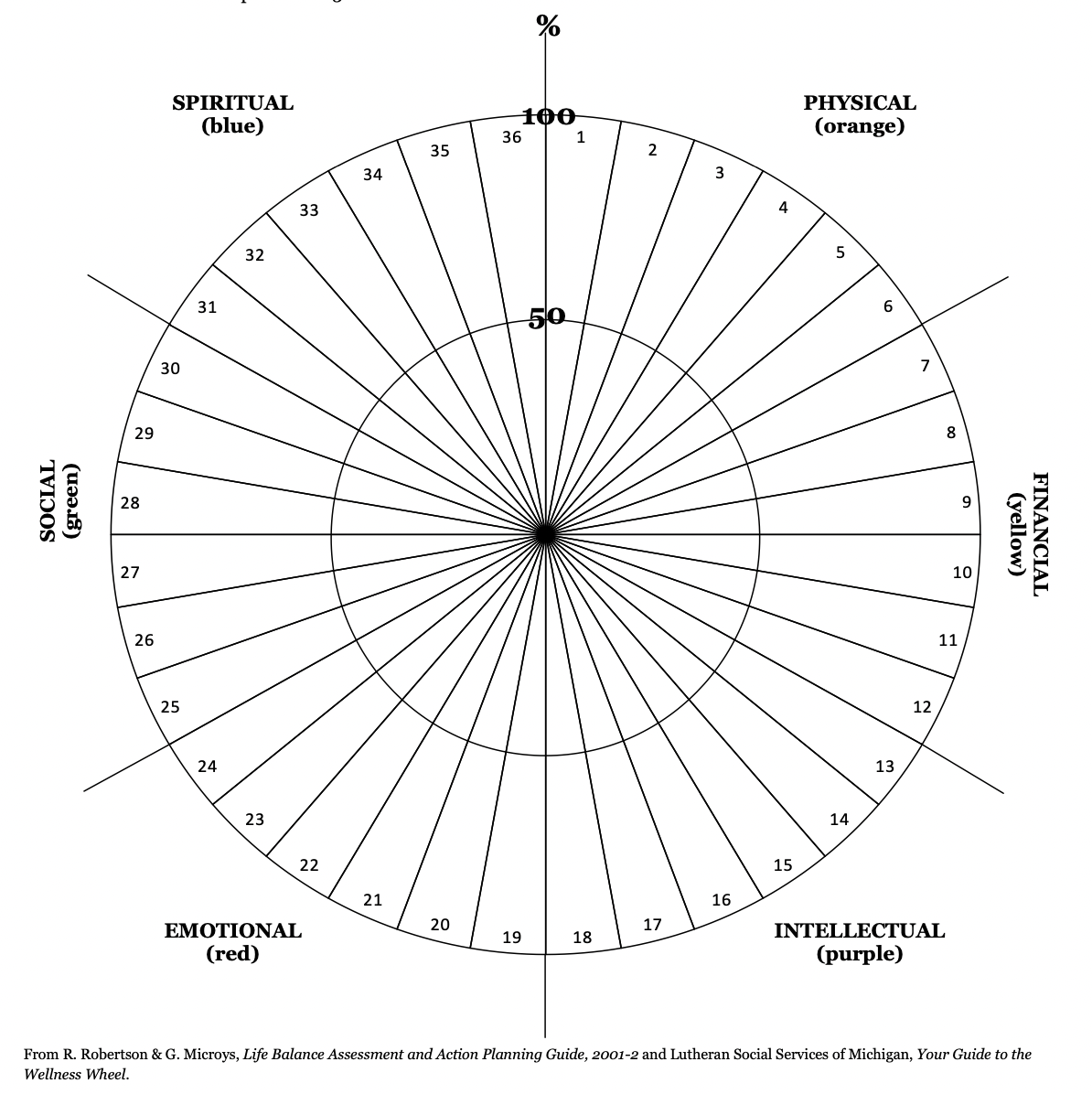
/Life doesn’t come with a manual—but it does offer remarkable tools if we’re willing to slow down, look closely, and start where we are. One of those tools is the Life Balance Wheel, a deceptively simple but deeply insightful way to see how your energy and attention are being distributed across key areas of your life.
Think of your life like a wheel: when one area is neglected, your “ride” feels bumpy. When all the spokes are relatively even, you move forward with more ease, resilience, and purpose.
How to Use the Wheel
Download, print and follow the instructions for the life-balance wheel found above.
Shade your current satisfaction level in each area from 0–100%. Use the questionnaire attached to do so.
Notice which wedges are “flat” and which are “full.”
Reflect—what area feels light? What feels heavy?
Choose one actionable step in each area to strengthen it.
Track your progress and revisit the wheel monthly or quarterly.
Remember: balance is aspirational, not flawless. Some areas may need more energy right now—and that’s okay. Balance isn’t about equal time in every wedge; it’s about intentional attention and alignment with your values.
Below we unpack the six areas of the wheel and offer practical steps for building each one up in ways that fit your life. Do not try to change everything all at once. Focus first on one area where you would like more balance.
1. Physical Well-being
This wedge isn’t about perfection—it’s about care for your body. The Life Balance Wheel prompts us to notice habits like nutrition, exercise, sleep, and preventive care.
Options to move forward:
Pick one physical habit you want to strengthen (e.g., 20-minute walk three times/week).
Schedule it like an appointment.
Track progress rather than perfection.
Small shifts create compounding effects. You don’t have to overhaul your whole routine to see change.
2. Financial Health
Our relationship with money deeply impacts stress, choices, and even relationships. The wheel encourages honest evaluation of current financial habits, values, and future planning.
Options to move forward:
Create a simple consistent budget check-in using the questions from the wheel.
Set one achievable goal (e.g., save $X/month, reduce a specific expense, seek out help from a professional).
Learn one thing about money management this month (book, podcast, counselor).
Financial health isn’t about wealth—it’s about stability and intentional stewardship.
3. Intellectual Growth
This area points to curiosity, learning, and engagement with ideas that stretch your mind and open possibilities. It includes education, reading, creativity, and career satisfaction.
Options to move forward:
Block weekly time to read, learn, or create.
Take a class or join a group around something that excites you.
Identify one passion project and break it into small steps.
Intellectual enrichment fuels purpose and prevents stagnation.
4. Emotional Well-being
Our emotional life isn’t something to be “fixed”—it’s something we attend to. This segment of the wheel looks at how you cope with stress, regulate emotions, and build resilience.
Options to move forward:
Commit to a daily rhythm (journaling, prayer, mindfulness).
Notice patterns without judgment: What drains you? What restores you?
Reach out: talk with a trusted friend, therapist, or support group.
Emotional maturity doesn’t mean always feeling good—it means feeling and responding with congruency.
5. Social Connection
Humans are wired for connection, yet it’s easy to let relationships get crowded out by tasks and stress. The wheel invites us to notice the quality of our relationships: with family, friends, community.
Options to move forward:
Choose one relationship to deepen (coffee, calls, shared walk).
Set gentle boundaries with relationships that drain you as needed.
Find at least one community or group that feels nourishing, safe, and possible.
Connection isn’t optional—it’s part of what makes life meaningful.
6. Spiritual Life
Spiritual life means different things for different people. In the Life Balance Wheel, this piece reflects a sense of meaning, purpose, hope, and connection to something larger than yourself.
Options to move forward:
Create a small, daily spiritual practice (quiet time, meditation, prayer, yoga).
Reflect on core values and how your life aligns with them.
Seek experiences that inspire awe, gratitude, or wonder.
Spiritual growth doesn’t require perfect beliefs—just honest seeking.
Before You Go: A Gentle Reminder
No one masters balance overnight. You’re navigating rhythms, seasons, and sometimes survival. Using this wheel isn’t about self-criticism—it’s about clarity, compassion, and choice. It’s about noticing what’s alive in you and where you might need a bit more life-giving support. If this tool brings up more questions or emotional weight, that’s a perfect opportunity to bring those reflections into counseling, conversation, or prayer.
Let your wheel be a starting point, not a judgment point.
If you’d like support interpreting your life balance wheel or developing a plan that fits you, consider reaching out to one of our counselors. You don’t have to balance everything alone.